How We Find AC Refrigerant Leaks Before They Become Big Problems
Refrigerant leaks are sneaky. Your system keeps running, the thermostat looks fine, but your home just never quite cools down the way it should. By the time most people notice something is off, the leak has been quietly draining efficiency - and money - for a while.
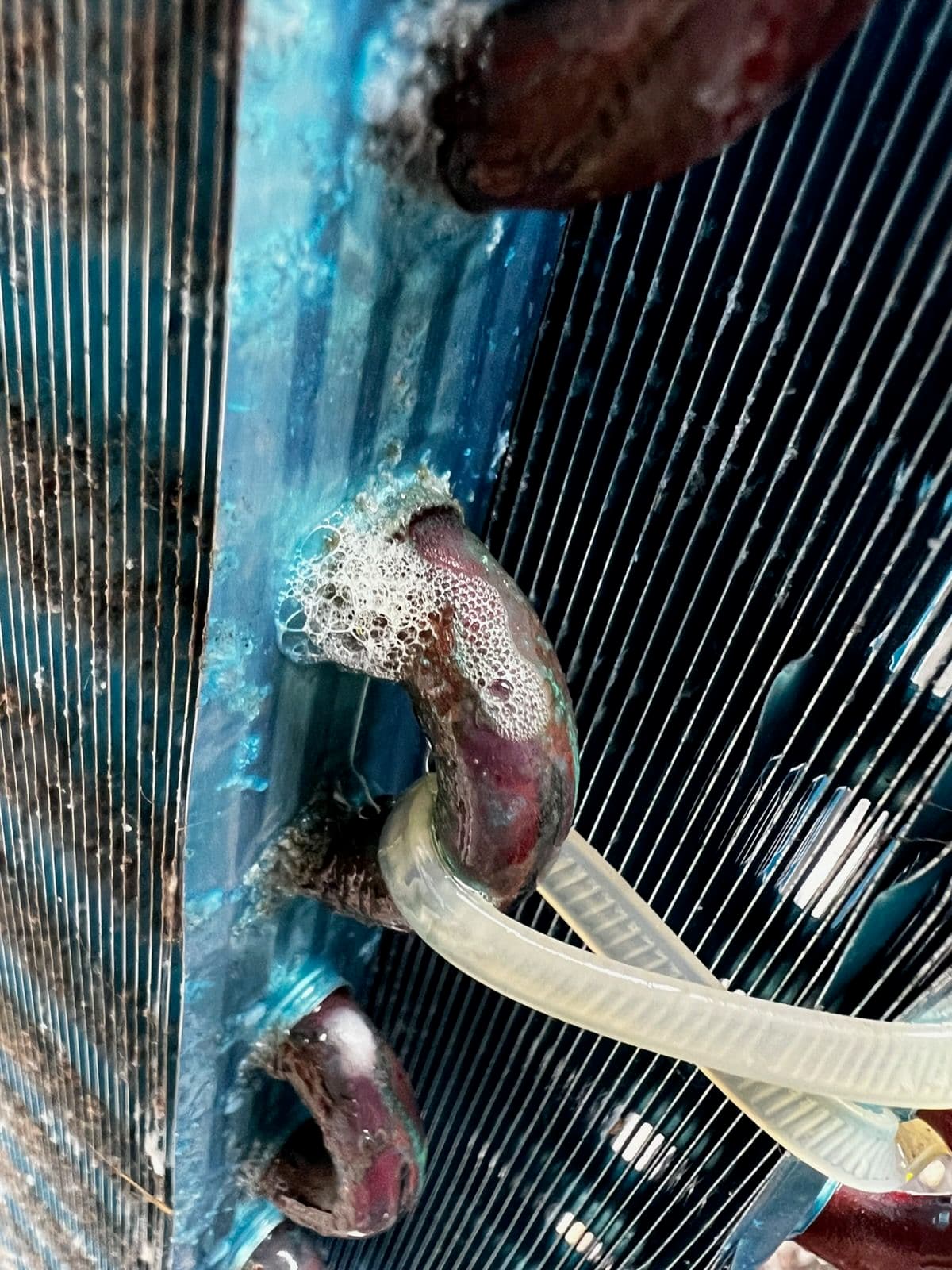
One of the most reliable ways to find a leak is also one of the most straightforward. We apply soapy water directly to the refrigerant lines and fittings on the heat exchanger. If there's a leak, the escaping gas bubbles up through the solution and shows us exactly where the problem is. No guesswork.
What you're seeing here is that process in action. The copper lines and fittings show visible bubbling, which tells us precisely where the refrigerant is escaping. That kind of pinpoint accuracy matters - it means we're not replacing parts that don't need replacing, and we're not missing the actual source of the problem.
It's worth noting the condition of the coil and fittings in a case like this. Corrosion and wear around refrigerant connections are common causes of leaks, especially in systems that have been running for several years. Catching it at this stage means we can address the specific failure point rather than waiting for a full system breakdown.
We've seen what happens when a refrigerant leak goes undetected too long - the compressor works harder, components wear out faster, and repair bills get significantly bigger. Leak detection is one of those services that looks simple on the surface but requires knowing exactly where and how to look. That's what we do.